Photographs Reminiscent of Traditional Chinese Paintings
Don Hong-Oai was born in Canton, China in 1929 and was raised and educated in Saigon as the youngest son of a business family.
At age 13 he began an apprenticeship at a Chinese photo and portrait shop. During this time he learned the traditional ways of photography from the masters. Everything was done the old-fashioned way from exposing the glass negatives in sunlight to using instinct rather than timers. Don would photograph landscapes in his free time and his style was heavily influenced by the legendary photographer Long Chin-San and his technique of layering negatives to create one composite image.
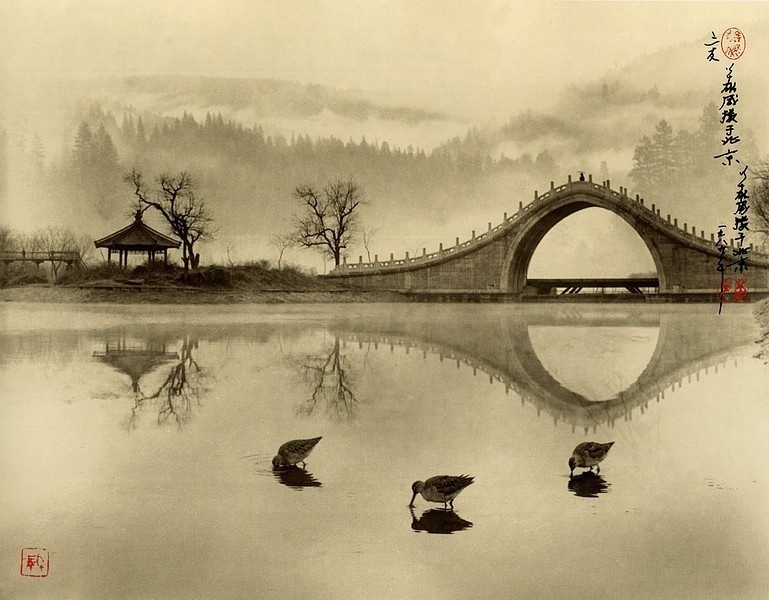
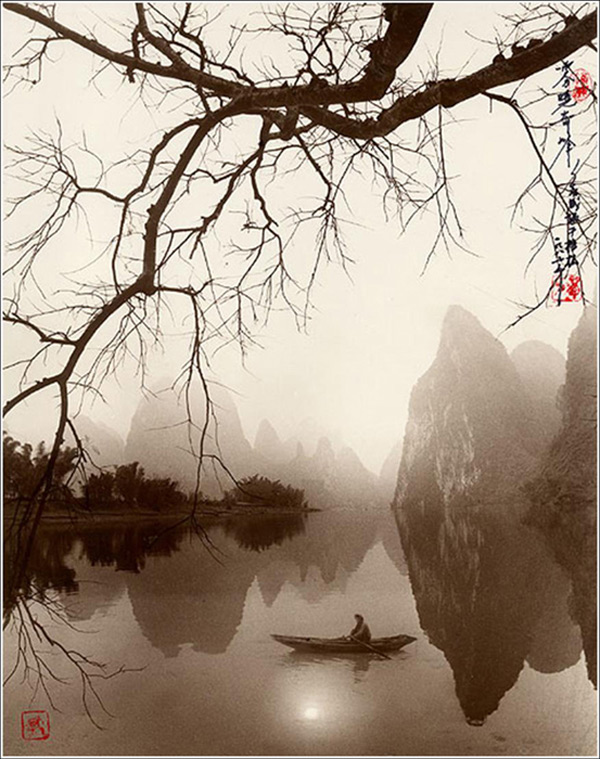
In 1979 he was able to get to the U.S. and settled in San Francisco’s Chinese community. Don started making a living selling his landscape photographs in front of Macy’s and began to receive more and more recognition for his master craftsmanship. He would create these images by taking three negatives, foreground, middle ground and far ground, and selecting a subject matter from each negative to form one composite image. All parts of the image do exist in life, but the photograph as a whole is an image that only existed in Don’s imagination. Each photograph is a unique handcrafted piece of work.
He never had an assistant or had his images put together in a lab. Each piece had to be put together by Don as he saw it in his mind. His work has won scores of international awards and is included in hundreds of personal and corporate collections worldwide.ve to create a beautiful picture, often using visual allegories. Realism was not a goal.
Don Hong-Oai was one of the last photographers to work in this manner. He is also arguably the best. He has won hundreds of awards given by photography societies throughout Asia and by international juries of Kodak and Nikon.


Don Hong-Oai was born in Canton, China in 1929 and was raised and educated in Saigon as the youngest son of a business family.
At age 13 he began an apprenticeship at a Chinese photo and portrait shop. During this time he learned the traditional ways of photography from the masters. Everything was done the old-fashioned way from exposing the glass negatives in sunlight to using instinct rather than timers. Don would photograph landscapes in his free time and his style was heavily influenced by the legendary photographer Long Chin-San and his technique of layering negatives to create one composite image.
In 1979 he was able to get to the U.S. and settled in San Francisco’s Chinese community. Don started making a living selling his landscape photographs in front of Macy’s and began to receive more and more recognition for his master craftsmanship. He would create these images by taking three negatives, foreground, middle ground and far ground, and selecting a subject matter from each negative to form one composite image. All parts of the image do exist in life, but the photograph as a whole is an image that only existed in Don’s imagination. Each photograph is a unique handcrafted piece of work.
He never had an assistant or had his images put together in a lab. Each piece had to be put together by Don as he saw it in his mind. His work has won scores of international awards and is included in hundreds of personal and corporate collections worldwide.ve to create a beautiful picture, often using visual allegories. Realism was not a goal.
Don Hong-Oai was one of the last photographers to work in this manner. He is also arguably the best. He has won hundreds of awards given by photography societies throughout Asia and by international juries of Kodak and Nikon.